

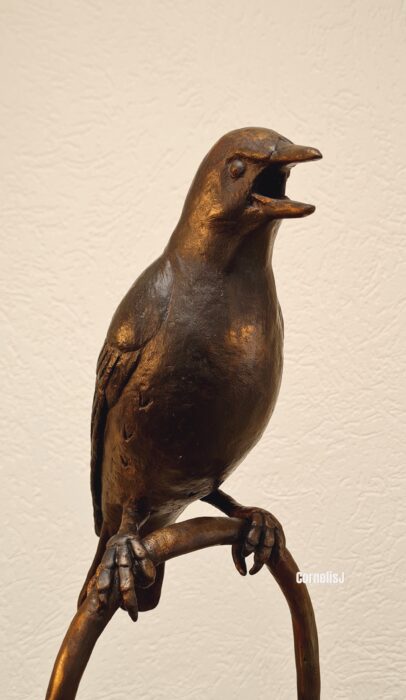
Start 19-7-2021, on the pedestal 22-01-2023.
Inspiration
One beautiful summer day, a magnificent starling landed on an arch in the garden. He thought the world was his, and he made it known. He shouted (screamed) it from the rooftops: he was the boss!
It’s wonderful that such a small bird has that potential, I was immediately won over!
Position of the sculpture
Design
The intention is to cast this sculpture directly, without a mold. This will be done using a brass armature, which will not rust when cast. Openings are also provided to create the bird’s “light feel,” primarily for the wing feathers, which will be precisely shaped.
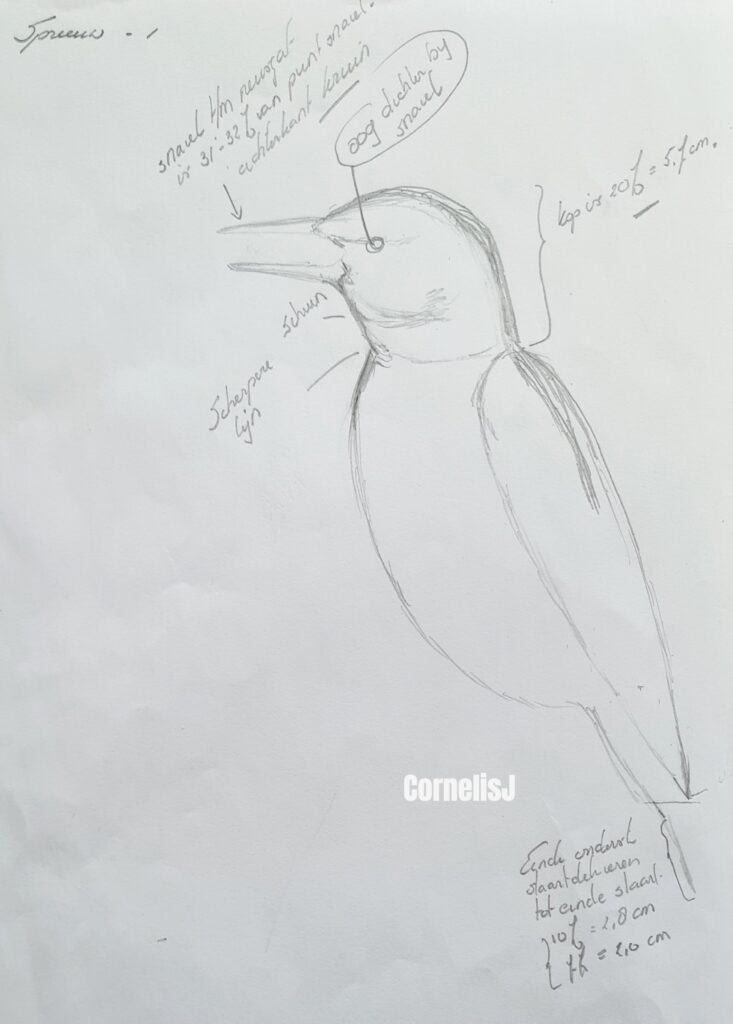
The starling is somewhat larger (28.5 cm) than in reality (22 cm) to reinforce the dominant impression and to make the beak strong enough to allow it to open.
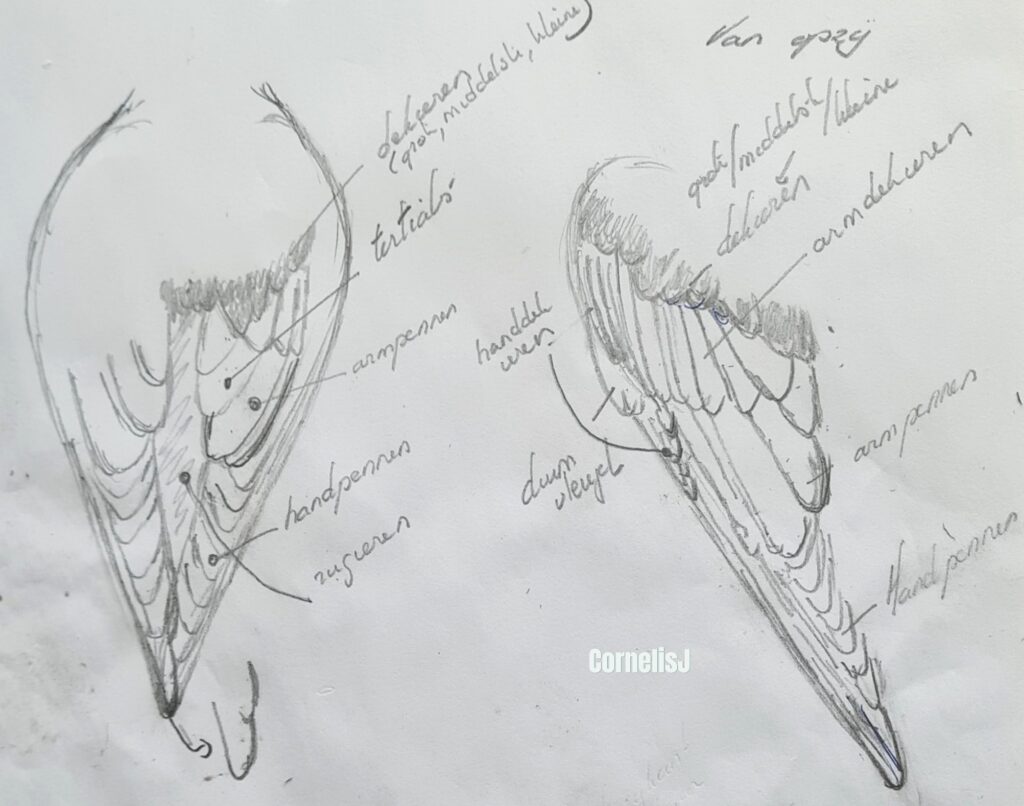
Sketches have been made to illustrate the position and details of the starling, including
Body:
Wings:
Beak:

Armature
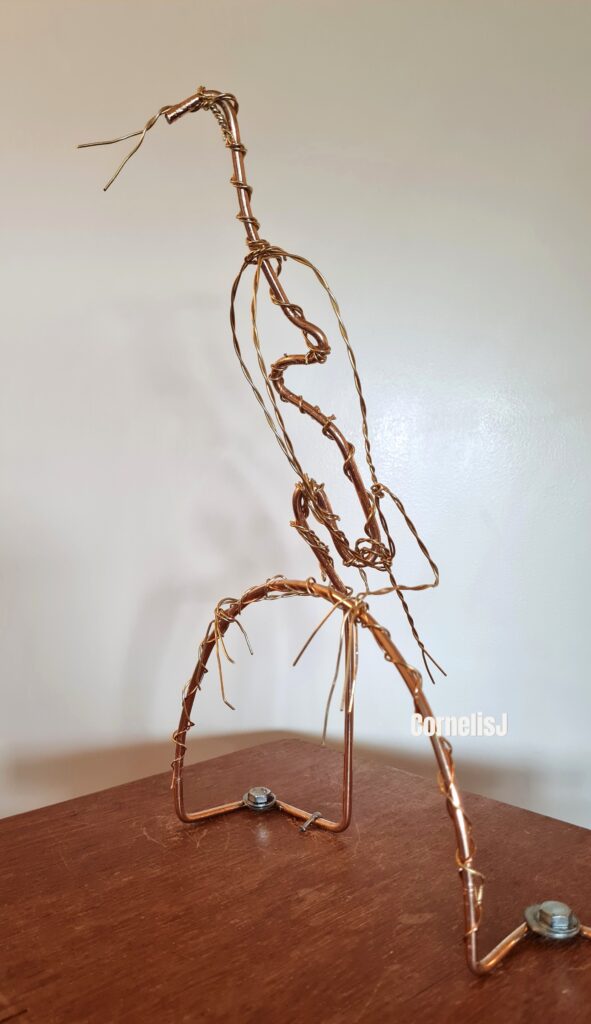
The armature is made of phosphor bronze rod and brass wire. The upper part of the arc is incorporated into the armature because it interacts significantly with the legs.
The brass armature won’t melt with the bronze, it will remain within the bronze sculpture. To prevent the brass from becoming visible after casting, the armature is made as a solid whole.
To prevent cracks and breaks as the bronze cools, it’s recommended to maintain a thickness of approximately 6 mm. To achieve this, the brass armature can be coated with just a few millimeters of wax. This means the armature should essentially already have the shape of the final sculpture, but slightly smaller to accommodate the wax to be applied.
The final armature:
Sculpting
It was quite a struggle to sculpt the statue to the desired proportions. It took me almost a year, with some interruptions. His beautiful markings, movements, and behaviour made him very expressive, and that had to be reflected in the sculpture.
As mentioned, the brass armature should already contain the entire shape of the sculpture. As a result, if you want to make more drastic adjustments, you also have to adjust the armature. This was necessary several times, for the neck, beak, wings, and back.
The final result in wax:

Bronze caster
As previously mentioned, this wax model was cast directly in bronze. This means the bronze caster creates pour and air channels on the wax model, forms the whole thing into a mold, and finally pours the bronze.
The casting was largely successful, especially the back with the wing feathers.

Unfortunately, the bronze didn’t flow properly in one part of the arch and in the left leg. This is because I didn’t apply enough wax around the armature in those areas.
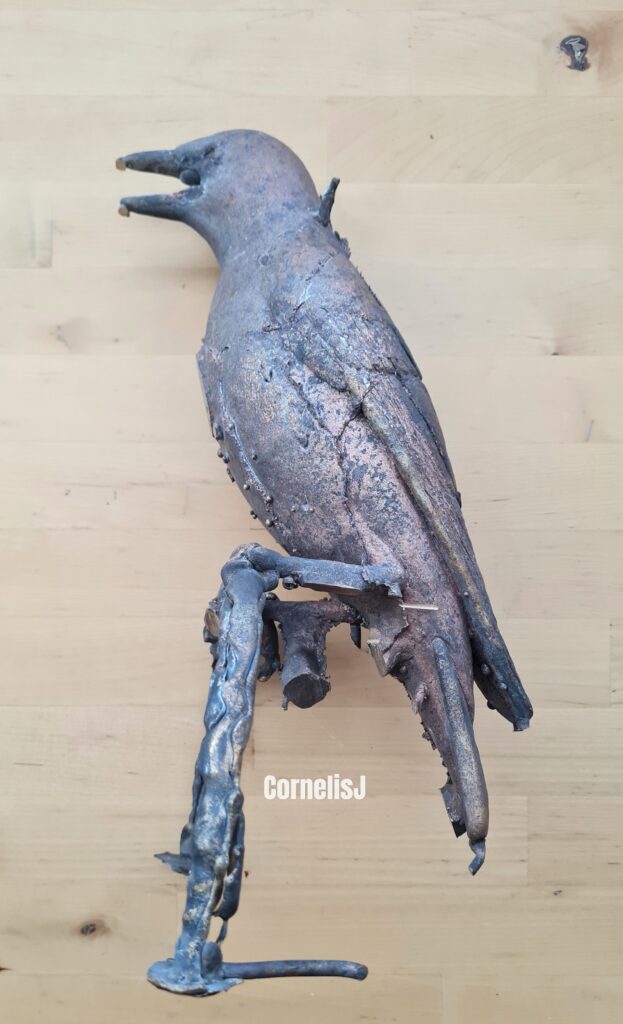
Fortunately, the bronze caster was able to repair the arch, and I sculpted a new leg myself, so that it could be slid over the arch.

This leg was recast and attached to the arch and starling. All in all, the casting turned out well in the end!
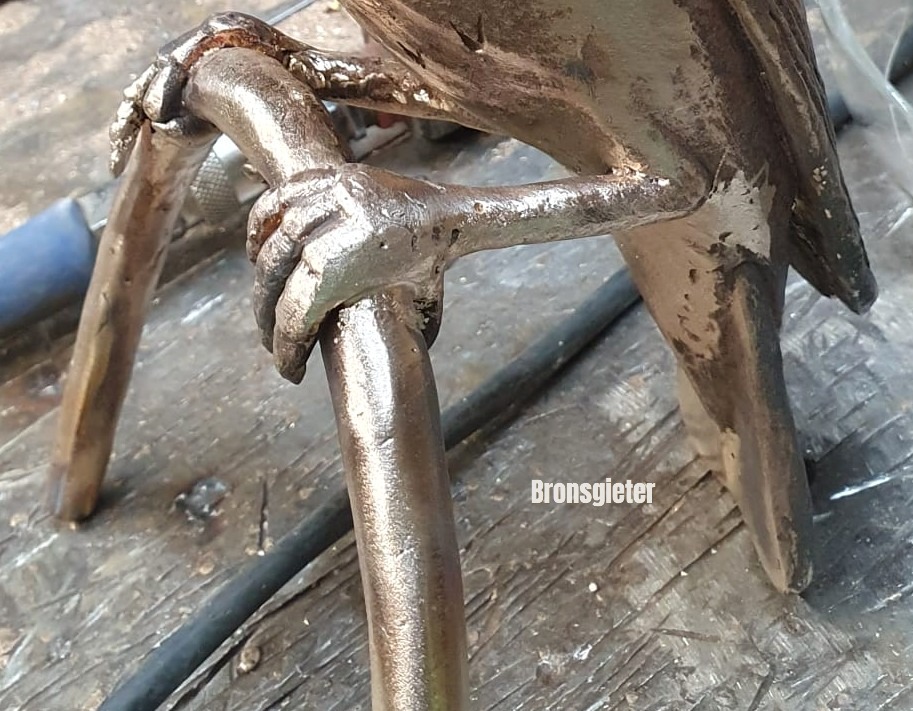
The bronze caster then chiseled and patinated the sculpture. The starling is patinated black with green accents on its wings.
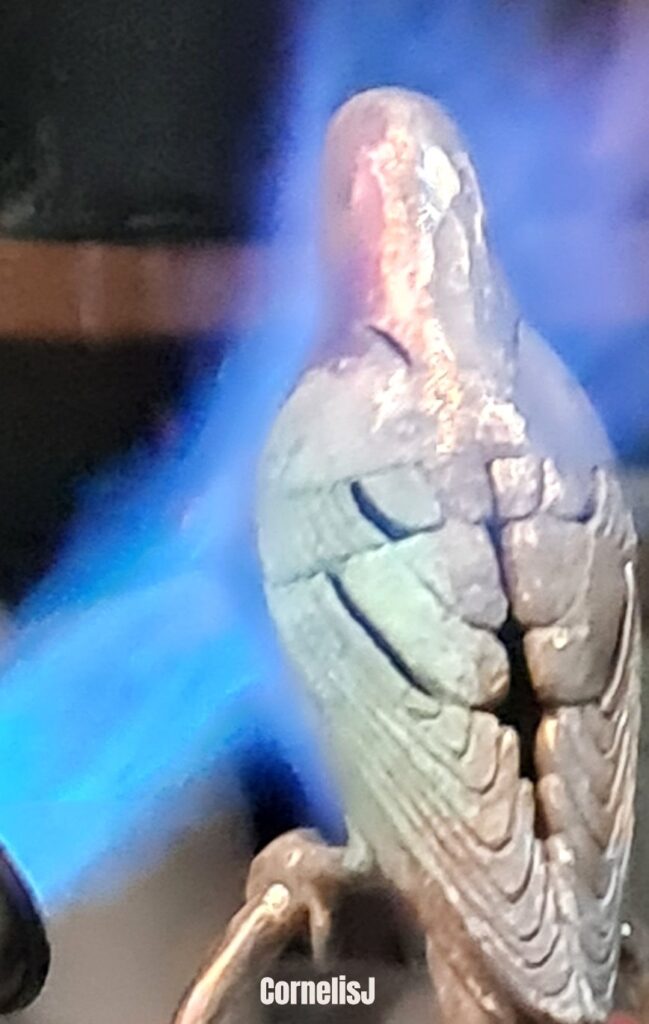
The beak and legs were then “finished” with a copper brush to the original lighter bronze color.
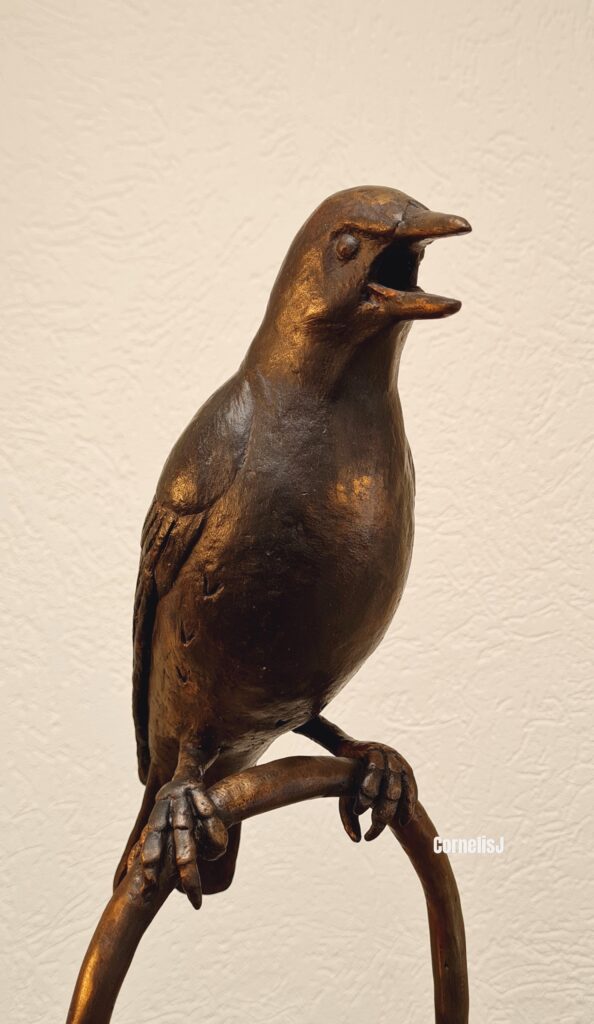
And here’s the final result:
Pedestal and pedestal pin
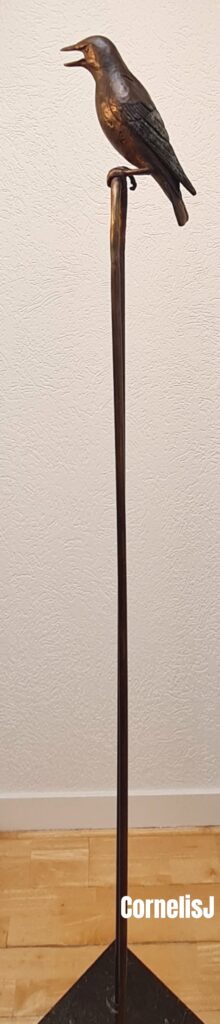
I decided to place the starling, just as it did when it perched on the arch, on high pedestal pins (1.5 meters) from the arch. These pedestals are made of brass rod. These pedestal pins are also patinated black, thus forming a seamless whole with the sculpture.
There was still a stone pedestal with one hole in it. I drilled an extra hole in it so both brass gate pieces could be placed in the pedestal. There was some extra space in one of the holes, which I filled with brass wire pieces. This made it stable.
Finally, I also added stone wax to the statue and the pedestal pins. I think that gives it a nicer look.
Final result, including the pedestal:
Evaluation
Casting without a silicone mold is proving risky. If something goes wrong and repair isn’t possible, the entire work you’ve spent so much time creating will be lost. So from now on, I’ll be making a silicone mold for my bronze sculptures.
Then a (complex) brass armature designed for direct casting is no longer necessary, and a simpler one, e.g., aluminum, steel, or plastic, will suffice.
It was a sculpture in the making, with obstacles, but I learned a lot!